header image

Pharm Fox in the Health Henhouse!

In a last minute announcement under the Bush administration, one that leaves consumer advocates stunned,

Different types of peer-reviewed research journals
Image via Wikipedia

our FDA (Foolish and Deteriorated Abysmally) has passed a ruling that allows pharmaceutical companies to directly market off-label (translation: unapproved) uses of drugs to doctors. The caveat that’s supposed to make this all okey-dokey (per the industry) is that marketing for unapproved uses must be done by handing out published studies from peer-reviewed journals that report conflicts of interest. Keep in mind, the exact phrase is: journals who “report” conflicts of interest, not BAN conflicts of interest. The Pharm news this year has been rife with reports of journal articles that are (yes, indeed) ghost-written by pharmaceutical companies, (here and here and here) and by horrific stories of researchers who out and out lied about the amount of money they were receiving from Big Pharm. It took a lone Republican Senator, Chuck Grassley (and his trusty six-shooter subpoena) to get some of them to finally admit to
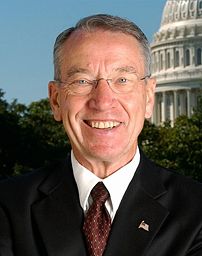
{{w|Chuck Grassley}}, U.S. Senator from Iowa.
Image via Wikipedia

the obscene amounts they were receiving under the table. Prominent researchers at Emory, University of Texas and Harvard Medical School were among those cited.

Given all that, how likely does it seem that these “studies” are an effective check and balance on the marketing of unapproved uses? Do I see any hands? Anyone?

But some of you may be asking – exactly why are unapproved, or off-label, uses of drugs so bad? Don’t they – like the drug companies claim – save the lives of people with incurable diseases? Um. No. If an amazing new, curative drug-use for a lethal disease is discovered, you don’t really have to market it. Not even by hand-passing-out “studies.” Heavy, expensive marketing is used for those problems and diseases (usually non-lethal) where nothing much works all that well – including the drug that’s being pushed. Check out what you see advertised on TV for a little slice of what I’m talking about. Doctors, in general, will all tell you that this marketing doesn’t work on them (“maybe on other doctors, but not me”) - despite numerous well-done, verified studies that prove pharm doctor-marketing is extremely effective. Even more convincing to me is the willingness of profit-rabid drug companies to fork over hundreds of millions for it – now there’s a litmus test for effectiveness if there ever was one. If you want a chilling overview of just how slimy, dangerous and effective the off-label ILLEGAL marketing of drugs was (even before this FDA Fox-In-The-Henhouse ruling), check out this very recent, succinct article about Eli Lilly’s $1.4 billion (yes, that’s a B – billion) dollar settlement for off-label marketing of the drug Zyprexa. Make sure you read all the way to the bottom of the article, where you’ll find that this whopper of a penalty doesn’t even come close to denting the $4 billion (yes, that’s another B – billion) dollars a year they made off this one drug.That’s just one example – and others abound.

All of which begs the question: If you were a rapacious drug company (some would say that’s a redundant phrase, but bear with me) and you can get all that mucho-money (even after the penalty), and now  marketing with sham studies is legal, why would anyone, ever, actually get a drug tested and verified as safe and effective? All you need is a low-paid ghost-writer, a researcher with queasy ethics, and some reps to hand out “studies.” Heck, why even have an FDA – let’s just go back the thalidomide days (shudder). Unless, that is, the in-coming administration might actually, in these darkened days where we all sit huddled together (heck, my feathers are ruffled!), step up and lock the door to our healthcare Henhouse. Let’s all hope for a new FDA (Fox Ditching Ahead).

Is there any clear sign that this might happen – that the corporate strangle-hold on even sane regulations might be weakening? As this recent article reports, Dr. Sidney Wolfe, a vocal critic of the FDA, was appointed in October to the FDA’s Drug Safety Committee. The Wall Street Journal says this is a move that has left industry insiders reeling from the potential fall-out. Hmm…do you think they should take Zyprexa for that?

Reblog this post [with Zemanta]

Related posts:

  1. FDA Finally Cleaning House?
  2. Who’s Profiting From Your Health?
  3. Poo on You – Six Health Issues To Know

If you liked my post, feel free to subscribe to my rss feeds

4 Comments so far (Add 1 more)

  1. as a pharma rep, I have witnessed representatives discuss reprints distributed to physicians on off label indications. If representatives do report this activity to their Compliance Department, they are very often targeted for termination rather than the offender.

    1. pharmarep on March 24th, 2009 at 8:48 am
  2. The Conversion of Our Protector

    The Food and Drug Administration originated in its primitive form several decades ago to ensure the health and safety of the citizens of the United States in regards to what they consume that is provided to them by manufacturers for their intake. The one person who became the catalyst for the formation of the Food and Drug Administration was a socialist named Upton Sinclair, who was a writer. One particular book, while fictional, addressed the working conditions in a meat packaging company that were quite shockingly described by Upton in this book. While the author intended with composing this book, “The Jungle”, to address and focus for the benefit of the readers his paradigm regarding capitalism, the issue in his book regarding food safety is what caught the attention of the public, including the president, who was involved with the development of the Food and Drug Administration soon afterwards.
    However, the purpose and function of the FDA seems to have changed the past few decades, as the FDA appears to have decided to ensure the health of the pharmaceutical industry instead of the public health. A new FDA commissioner who is willing to resurrect the apex of the FDA and its purpose may have a positive effect on the public’s health. As presently, there are disturbing flaws within the FDA.
    One example is the large amounts of money the industry gives the FDA for various reasons created recently- amounts so large that this accounts, according to some, for about half of the FDA’s total income, although it is by definition a governmental administration. An example of stated reason for receiving such funds is due to the prescription drug user fee act, which began in 1992. Basically, the drug industry has been authorized and is now required to pay the FDA for faster approval of their pending medications after pharmaceutical companies submit a new drug application to the FDA. This act now accounts for nearly 50 percent of the FDA’s drug oversight budget through this operational funding given to them by those who the FDA is suppose to regulate for the safety of the public health. The FDA also accepts over a million dollars from the pharmaceutical industry to give their pending new drug a priority review of 6 months instead of a year, along with a created etiology for this urgency often, it has been reported.
    Results of this relationship, which some have called collusive and pathologically intimate, this collaboration between the drug industry and the FDA, could be a contributing factor the progressive and recent approval of unsafe drugs, so it seems. This has been demonstrated by their removal of, or a labeling change, requiring what is known as a black box warning of such drugs, which means that the drug is basically on probation. The lack of regulation and monitoring required by the FDA of the pharmaceutical industry has resulted in such dangerous safety concerns. In addition, the FDA continues to validate what has been surmised by many regarding their financial support from the drug industry that appears to be reciprocal. The result of this relationship has resulted in less than optimal protection regarding the health of the public with pharmaceuticals made available to them.
    The presumed intimacy between these two organizations, the pharmaceutical industry and the FDA, does in fact seem to continue to worsen. For example, and recently, the FDA considered supporting overtly this massive and necessary client of theirs, the pharmaceutical industry, to allow their promoters to discuss their products that may or may not have been approved by the FDA for particular disease states. Yet the FDA claims that this proposal would enhance the education and knowledge of the prescriber by the pharmaceutical representative of the marketer of a particular medication, which remarkably mirrors the premise and objective of this industry already. So this strategy, void of any protection of the public health and potential dangers associated with this practice, illustrates once again the present state of the FDA and its need for reform.
    A prescriber, upon their own discretion, can in fact prescribe a drug off-label, but historically and legally, however, representatives from the pharmaceutical industry have been prohibited from suggesting indications assigned to their promoted drugs by the FDA. In fact, it is a federal offense for such representatives to speak off-label about the drugs they promote, and more pharmaceutical companies are and have been penalized for this activity in the form of large settlements paid by such pharmaceutical corporations in the past as determined by the department of justice.
    This off-label FDA protocol for drug representatives that has been described and proposed by our FDA with presumed encouragement by the pharmaceutical industry is called, “Good Reprint Practices.” This absurd benefit for the pharmaceutical industry would have pharmaceutical sales representatives use what may not truly exist, which is truthful and authentic clinical trials illustrating any off label claim regarding their promoted medication to health care providers. It is believed that many clinical trials are biased if not manipulated, so this strategy that apparently adds comfort to this protocol is invalid. Additional trial deception may include such factors as ghostwriting and fabricated authors of such trials, and this is one of many concerns of this FDA protocol that has been, or is now being considered. These facts can be validated and have been discovered by others, so it appears the FDA did not take this into consideration when they did suggest this ridiculous and frightening authorization offered to their client, the pharmaceutical industry.
    Furthermore, this proposal is flawed in that most pharmaceutical representatives lack necessary medical and clinical training to discuss aspects of clinical trials. Most drug representatives have little medical or clinical training in any objective way, and they are not hired with having such a background, usually. So this seems to further complicate the idea of this off-label concept proposed by the FDA due to the ignorance of the representatives to discuss such clinical matters. In addition, the relaxation of previous restrictions regarding off-label promotion could prove to be a catalyst for representatives of the pharmaceutical industry to further embellish statements to prescribers for their own benefit in regards to their promoted medications they present to them. In fact recently, a study by Sermo concluded that 90 percent of doctors want clinical evidence based medicine from educated and trained professionals instead of the typical pharmaceutical sales representatives that now exist. This study also concluded that around 80 percent of health care providers prefer not to interact with pharmaceutical representatives, yet still accept drug samples from them for their patients.
    So, our previous safety association, the FDA, appears to be evolving into a possibly harmful association with the pharmaceutical industry by suggesting such practices that aggravate the existing situation with the lack of protection that was once offered and required from the FDA.
    It is unbelievable this good reprint practices proposal ever came into existence, with the delusional fallacy that it would be of any benefit to patient health. Furthermore, this may complicate existing patient medication errors, such as in the elderly or dosing for children, complicated by the fact that many are unable to understand label instructions on their med. So there are enough problems with prescribing, and adding this FDA proposal would just make the situation worse. We as citizens are no longer the concern of the FDA, one could conclude, and this is clearly dangerous to the public’s health.
    Perhaps another alternative would be to have clinically trained people discuss such issues regarding the benefits of medications with prescribers, instead of existing drug reps, who, unlike those academically enriched, have the objective of increasing the market share of their promoted meds with no regard to the science behind these meds, in large part. Because historically, medications have in fact proven to be beneficial for other disease states other than what a certain drug was initially indicated for upon approval. Yet this should not be determined by those who promote such drugs.
    Regardless, awareness needs to happen by the citizens involving such tactics allowed by the FDA that are dangerous and deceptive. As citizens, we have the right to insist that the FDA, our FDA, maintains focus on the safety of the public and their health. Reform of the FDA appears to be necessary for this to occur to re-establish the FDA as an administration that was created for our protection.
    About half of all drugs approved presently by the FDA have had serious post-approval side effects that should have already been known or suspected of these drugs. Well over 100 thousand people die every year from drug reactions or mistakes. Over 75 percent of drugs that are newly approved are very similar in efficacy, for example, as drugs that already exist and are available. This does not include the drugs that are approved that are simply direct to DVD sequels of existing medications in the same class. To complicate these issues, many of the ‘medical ailments’ in which others take drugs are often exaggerated and dubious, thanks to embellished promotion of these drugs, in large part, and this is largely un-regulated by the FDA, of course.
    This seems to be a rather significant obstacle for those who are need to restore their health.
    “Unlimited power is apt to corrupt the minds of those who possess it.” — William Pitt
    Dan Abshear (author’s note: what has been written was based on information and belief)

    2. Dan on January 30th, 2009 at 2:57 pm
  3. Not long ago, I got the joy and despair of viewing many documents that were initially not to be seen, by order of the Department of Justice, yet found their way on various locations on the internet- specifically, the website: http://www.furiousseasons.com. The documents are, or were, in fact, evidence against Eli Lilly entirely representing their decade of deception promoting and over-medicating others with their drug called Zyprexa, which is in a class of medications called atypical anti-psychotics.
    While a new a new molecular entity by definition, this new class called atypical antipsychotics in fact is chemically similar to the older and typical anti-psychotics that existed, such as Haldol, which were available over 50 years ago. In many ways, the older antipsychotics are safer as well as being similar in efficacy compared with the atypicals such as Zyprexa.
    Perhaps this is why Eli Lilly did the things they did because they knew Zyprexa caused perhaps more harm than good for those who took the medication. Of the several available atypical anti-psychotics now available, Zyprexa and Clozaril, which was the first atypical anti-psychotic, are believed to have the most toxic adverse events to those who take these two in this class of medications.
    Launched in 1996, Eli Lilly did not appear to consider the evidence regarding the adverse effects that may occur to those who take this drug, yet it is believed that there was reason to state by Lilly that there should be caution regarding the use of Zyprexa in those patients prescribed this drug. With the belief that the maker of Zyprexa is and will be exonerated from any responsibility related to this drug, the promotional campaign was implemented, and has continued ever since.
    Evidence of this is a warning letter received by Lilly by the FDA as a warning due to the false and misleading claims Lilly was making about Zyprexa less than 2 months after this drug was approved by the FDA.
    At the time Zyprexa was granted approval for marketing, the medication was indicated only for schizophrenia and mania that exists in those with bipolar disorder. Schizophrenia has been defined as a disease that causes the sufferer to deviate from true reality, along with visual and auditory hallucinations. Bipolar disorder is another mental disorder where the victim alternates from states of heightened neurokinetics to periods of what can be brutal depression for the sufferer.
    Eli Lilly, known in recent years by many for their focus on marketing over science or research, greatly desired and hoped that Zyprexa would be a welcome blockbuster for them, which is a medication that exceeds a billion dollars a year in sales as a minimum. And Eli Lilly appeared to have constructed the obedient and manipulated sales force presumed to be a necessity for this monetary goal to occur without interference. Yet in actuality, they created a sales force to break federal law from at least the years of 1999 to 2003.
    A note about pharmaceutical promotion: pharmaceutical representatives overall are attractive and young individuals with little if any medical knowledge or training, but are determined to have charming personalities along with a perception of obedience related to the pharmaceutical culture, and this is all Eli Lilly in particular wanted from the members of their sales force. The sales vocation is normally associated to contain members with a high affinity for money, it is believed, so corruptive acts such as off label promotion or overt kickbacks is not typically a consideration of such people, overall, as history has shown.
    Therefore, if Eli Lilly’s sales representatives who happen to be instructed to sell Zyprexa for dementia or depression, the orders will likely be followed by such promoters. Or if this sales force is instructed to pay specifically targeted doctors large amounts of money for doing little or no work for this money given to such doctors, it still is not a problem for the sales force to maintain their obedience to their corporate God. This is the perception of not only myself, but many others as well. Plan of action meetings (POAs) are meetings that are held a few times a year by sizable pharmaceutical corporations to dispense orders to their sales representatives regarding the promotion of their drugs.
    A few years after Eli Lilly launched Zyprexa, the maker appeared, according to documents, anxious due to their obvious disappointment regarding the initial prediction that was speculated about the growth of this drug that was not meeting their expectations, so they had POA meetings throughout the nation and shared with the members of their sales force that there is fact a great benefit from a monetary paradigm of implementing ‘seeding trials’, as they are a mechanism for generating needed, although fabricated data void of any scientific gain of knowledge (this will be discussed later).
    This amazingly was done and implemented afterwards rather overtly. Even more unbelievable is that around this time, the Zyprexa sales force was instructed by Eli Lilly management to seek out clinical trial sites, along with investigators for these trials. Preferred by Eli Lilly was that the investigators had to either be Eli Lilly prescribing supporters or high volume prescribers. This protocol described was written internally, along with the etiology for performing these sham clinical trials. Anything in writing can be golden, from an illegal situation such as this.
    In addition to the clinical trial plan of action of no scientific benefit identified, Eli Lilly instructed its sales force to utilize what was in fact inaccurate promotional material that Eli Lilly gave its Zyprexa sales representatives to be used on their sales calls without exception. Even though this material was largely if not entirely false and misleading, which was the intent of Eli Lilly, they encouraged their hired promoters that such material was entirely accurate.
    To further saturate and corrupt the Zyprexa sales force, they were coerced to blunt assertively what are at this time widely recognized adverse effects of this medication, such as massive weight gain, along with glucose and lipid abnormalities- all of which are dangerous to the user of this medication.
    The corrosive promotion of Zyprexa by Eli Lilly continued as this dangerous medical corporation continued their efforts by intentionally altering certain Zyprexa articles by essentially rewriting them, followed by being reviewed internally and not externally by those who are called, ‘regulators’. The purpose was to stimulate what Eli Lilly believed was clearly absent, which was much needed commercial interest related to Zyprexa. It unfortunately worked to a noticeable degree. This is according to what appear to be internal documents from Eli Lilly.
    Then it came time to essentially buy benign support groups, if not create what are essentially front groups, in hopes that this would improve the growth of Zyprexa. One example is that Eli Lilly paid the American Diabetes Association for their assistance in obtaining endocrinologist consultants, which is a medical specialty that treats, among other things, diabetes.
    To reduce any possibility of an unexpected contingency doing this, they went ahead and hired a good sized team of diabetes educators. In 1999, Eli Lilly altered a Zyprexa report that originally illustrated the glucose problem with the medication, and did so with deliberate intent and reckless disregard for others. Eventually, the American Diabetes Association became quite the critic of Eli Lilly because of their harmful behavior regarding Zyprexa.
    A speculative thought regarding the freedom if not acceptance for this type of promotional behavior: there exists amazing alliances between Eli Lilly and the Bush administration have existed as well. George H.W. Bush became an Eli Lilly director after leaving the CIA and lobbied to infect third world countries with Lilly medications.
    He also did his best to maximize tax breaks further for this industry that now employs both himself and his political affiliation. In fact, many members of this administration have some connection with Eli Lilly. It seems to be a revolving door issue once again. One could speculate that the Zyprexa campaign continued for so long because of the relationships the maker of the drug had and has with other powerful people.
    The next related psychotic tactic (pun somewhat intended) Eli Lilly created was an advisory board paid well by this company to focus on the progressing concerns of Zyprexa. This tactic did work briefly, but did not change the view of the drug by the medical community in any way perceptually regarding their embellished drug.
    Understandably, the health care professionals in the medical community began to get vexed and irritated by Eli Lilly’s deceptive and overtly destructive promotional tactics regarding Zyprexa- which included the company’s own speakers that were utilized in the past expressing concerns overtly. Such events materializing resulted in many ways Eli Lilly being ostracized was because of their disregard for those they are obligated to serve in the medical community, which are those in need of restoration of their health.
    Perhaps most disturbing and harmful was the Eli Lilly’s intentional holding of crucial safety information related to Zyprexa even before the drug was even approved. For example, Eli Lilly’s Zyprexa representatives were instructed without doubt to neutralize the legitimate concerns doctors may have about Zyprexa, if not outright fear regarding this deadly drug they now perceived as being a clear reality. The representatives were in agreement of continuing to dodge or neutralize legitimate concerns about Zyprexa, with the promise of Eli Lilly’s management team to fill their wallets more if they maintain obedience regarding this directive that caused harm in the form of such physiological disorders as metabolic syndrome associated with Zyprexa, yet the sales force still denied the association due to the insistence of their employer.
    Essentially, the Zyprexa representatives with Eli Lilly were trained, perhaps aggressively, to disarm negative perceptions about Zyprexa, even though these perceptions continuously proved to be valid. This deeply troubled many Zyprexa representatives, as at this point they were aware of the dangers of the drug they were promoting, yet likely continued to do so in order to maintain employment.
    Also, and of no great surprise, off label promotion with Zyprexa if not other products by Eli Lilly was a norm within the organization and certainly encouraged by Eli Lilly’s management team. Encouraging doctors to prescribe Zyprexa for unapproved FDA indications are an example. Amazingly, reflecting back on the behavioral flaws by Eli Lilly for quite some time, they did not alter their method of business even though there was a strong perception regarding this company being both aggressive and greedy, and likely criminal in the way they chose to conduct their business.
    And depression was not the only off label claim with Zyprexa. Eli Lilly considered such criminal acts as off label promotion as ‘redefining the market’. This is yet another example of their absurdity. The overt demonstration of profits over patients is clearly absurd and inexcusable in any situation.
    In the year 2000, Eli Lilly greatly expanded what was called their long term care sales force to increase the utilization of Zyprexa intake in the elderly to nearly 200 specialty sales representatives. This patient population prescribed Zyprexa can be deadly- as Zyprexa is harmful to older citizens- specifically pneumonia and eventual premature death result from Zyprexa intake in this patient population.
    The intent was to promote Zyprexa for those certain elderly patients with dementia and Alzheimer’s disease, as a set of symptoms are thought to occur in such patients called, “Sunshiner’s syndrome- which includes elevated agitation and confusion in such patients in the evening hours primarily. The syndrome is vague and non-specific with unknown etiology, yet the intent was to sedate such patients with Zyprexa for this syndrome.
    Furthermore, the purpose was to have Zyprexa to be used in these patients to sedate them, a process known as ’snowing’. As a result, each long term care Lilly sales representative increased revenues for their employer more than other sales representatives in different divisions within the organization.
    Yet in the year 2002, Eli Lilly was having financial disappointments, which again did not shock many. So to stay in form, they went on a mission to develop speakers to align with them and to not educate others, but to pacify other doctors in hopes that their problems with Zyprexa would disappear. After the speaker episode, Eli Lilly had the audacity to claim that Zyprexa was indeed the best in the class of atypical antipsychotics. Such a statement appears psychotic, to say the least. And now the market for atypicals is about 5 billion a year, so there seemed to be no end as to what Eli Lilly might try next. Also in this year our FDA called Eli Lilly ‘a sponsor’. I find that a bit disturbing. As disturbing as the covert meetings Eli Lilly had with the FDA as well.
    As the new millennium progressed over the next few years, lawsuits became a concern for Eli Lilly regarding Zyprexa. Doing what any responsible corporate entity would most certainly do, the upper management of Eli Lilly had the audacity to blame the media for the way they handled their drug Zyprexa. Around this time, Eli Lilly needed and did hire a public relations firm because of their image crisis that was likely well-deserved. About this same time, Eli Lilly implemented a nationwide program entitled, “Operation: Restore Confidence”.
    I’m not sure how a fully rational and conscious group of Eli Lilly people could create something so ridiculous and unrealistic considering what has materialized due to their crimes. Equally deviating from reality of Eli Lilly’s behavior is that they actually thought they could increase Zyprexa growth by hammering home astronomical efficacy of Zyprexa and continue on the path they have created.
    Another failure to add to what has been annotated so far was when Eli Lilly hired an organization called Lifespan Marketing, who colluded with Eli Lilly to create a brand new market establishing Zyprexa as the standard of care. Maybe Eli Lilly needs to adopt a standard of care for itself. This, it is understood, was largely ineffective.
    At least one human insider within Eli Lilly wanted to let everyone know he did not, nor will he ever forget his experience as a Zyprexa representative with Eli Lilly for years. His name is Shahram Ahari and he aligned with a non-profit advocacy group called Pharmedout after this experience, which was created due to a state settlement from another pharmaceutical company’s wrongdoing. Sharam spends his days now making others aware of things such as what you have read so far. I’ve spoken with Shahram, and I admire his assistance with others trying to correct this medical mess. He sacrificed much, and continues to do so.
    Eli Lilly appears pathologically persistent in frightening ways: next was a national implementation plan of action which focused on training the Zyprexa sales force to use what was called a J.C.P. study to emphasize the numerous off label benefits of Zyprexa. At the same time, Eli Lilly determined that primary care doctors should be their number one Zyprexa targets for increasing the growth of their drug. With this new focus, the sales force for Zyprexa were somehow convinced to tell doctors that fatigue is really the only side effect that presents itself with Zyprexa use by their patients, which of course is false. Again, citizens are overall not catatonic about such actions if they are aware of them with understanding.
    While on this off label role with Zyprexa combined with being void of fair balance regarding presenting this drug to others, Eli Lilly attempted to revive their long term care efforts by taking on Aricept, and Alzheimer’s drug, and encouraged others to switch to Zyprexa. The reaction for this misbehavior was Zyprexa being removed from Medicaid in 2004, according to documents that are authentic, and are available to others. While Lilly filed with the FDA an indication for Alzheimer’s disease as well as dementia, Zyprexa lacked the evidence to prove that this drug did more good than harm for such patients.
    Allan Reier was the Zyprexa product team leader at one point for this drug. He may have developed the unbelievable strategy of visiting psychiatrists to assure them they will not be sued if they prescribe Zyprexa for their patients. Literature and documents prove this strategy was implemented. That in itself illustrates the concern Lilly has about Zyprexa.
    So, now we are at a point where Eli Lilly had a flash of reality and preferred no media contact. Gosh, what a surprise. There was also the disclosure of Eli Lilly continuing to create, if not fund, the deceptive front groups to screen others in order to sell more Zyprexa as well.
    The next tactical plan from Eli Lilly was to re-implement blunting techniques regarding Zyprexa. My guess is that they dragged this into a week- long meeting with their sales force. This of course included dodging concerns by doctors that they are normally encouraged to partner with, historically. Such tactical plans of action were associated with such clever names as, ‘Viva Zyprexa’, or Zyprexa Limitless”. Maybe the next one will be ‘Zyprexa Revenue Regression’. Zyprexa for atrophy, maybe?
    Another tactic authorized by Eli Lilly was to use those bonafide contract research organizations (CROs) to manufacture safety, health, and outcomes database studies. A deceptive publication plan followed.
    CROs are commercial research organizations that include often what may be substandard research investigators to work with the sponsor of such clinical trials. Eli Lilly, as a sponsor, has the ability to alter aspects of such trials for their own benefit. This was done- as they still encouraged as a result children to consume Zyprexa- near a million of them involved due to an arrangement that Zyprexa will be promoted by Lilly’s ADD drug Strattera.
    As stated earlier, previously sealed and damaging documents got exposed at the end of 2006, and are accessible on the internet and some websites, such as http://www.furiousseasons.com, which is what this article is based upon, overall, these internal documents that appear to be authentic.
    Perhaps the documents should have been exposed immediately instead of being held from public view. Perhaps prosecutors should not keep such information from others due to a collusive relationship with such corporations. One may only speculate as to why this occurs.
    Eli Lilly makes over 4 billion dollars a year on Zyprexa, and has made close to 40 billion dollars on their drug so far.
    Eli Lilly has had to pay well over a billion dollars for Zyprexa damage to others between 2006 and 2007. The company recently paid the largest one-time payment to settle accusations of their wrongdoing regarding Zyprexa at nearly 1.5 billion dollars- with pending cases involving over half of the United States. I’m sad to say I’m unconvinced this will change their behavior regarding their tactics. Cynical, perhaps I am. History proves this is often the case:
    “We deeply regret the past actions covered by the misdemeanor plea (1.4 billion dollar settlement with the DOJ). At Lilly, we take seriously our responsibilities to abide by all the laws governing our business practices, and we realize that we have a tremendous responsibility to the patients and healthcare professionals we serve. Every day and with every interaction we strive to operate in a responsible and compliant manner:
    “Doing the right thing is non-negotiable at Lilly, and I remain personally committed to all of us at Lilly maintaining the highest standards of conduct. The company’s comprehensive compliance program is an embedded part of the company’s culture. These are not just words to us- we continue to implement a range of programs and policies to help ensure that we operate in a manner consistent with all applicable laws and regulations. These programs apply to all parts of our business, and all of our employees are aware of the imperative for them to be models of compliance and of ethical behavior.” —— John C. Lechleiter, C.E.O., Eli Lilly
    Psychosis- One with a personality disorder manifested in aggressive, perverted, criminal, or amoral behavior without empathy or remorse.
    Dan Abshear
    Author’s note: What has been written is based upon information and belief.

    3. Dan on January 30th, 2009 at 2:56 pm
  4. Yeah, I saw the Zyprexa fine and my jaw dropped… it was a drop in the proverbial bucket. In order for fines to be an effective deterrent, one would hope they’d be a significant chunk of what a drug company profited for their wrong doing. I mean, a paltry fine just encourages the “tis better to ask forgiveness then permission” adage, don’tcha think?

    4. PinchingAbe on January 17th, 2009 at 10:56 am

Post a Comment

Your email is never published nor shared. Required fields are marked *

*
*